
MACI Cartilage Restoration for Knee Injuries in Los Angeles
A damaged area of knee cartilage can make every step, squat, or athletic movement increasingly uncomfortable. Unlike many other tissues, articular cartilage has limited capacity to heal on its own, so significant cartilage defects may require specialized treatment. For carefully selected patients, MACI offers an advanced cartilage restoration option that uses the patient's own cartilage cells. Understanding how MACI works, who may benefit, and what recovery involves can help patients explore their options.
What Is MACI Cartilage Restoration?
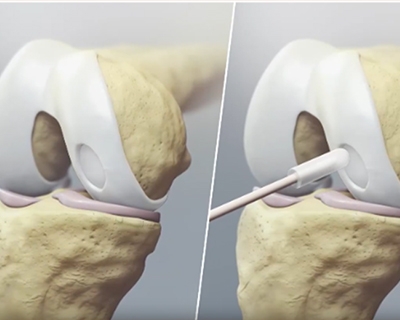
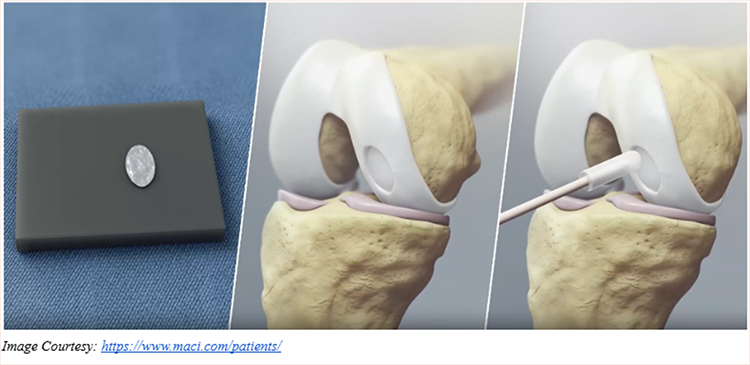
MACI, or matrix-induced autologous chondrocyte implantation, is a cartilage restoration procedure designed to treat certain symptomatic cartilage defects in the knee. The technique uses your own cartilage cells, which are collected and expanded before being incorporated into a collagen-based implant. The implant is then placed over the cartilage defect.
Unlike procedures that simply remove damaged tissue, MACI is intended to restore cartilage in a specific defect. It is therefore different from routine knee arthroscopy or partial meniscectomy, which address other structural problems inside the knee. You can also review patient-facing information on the official MACI website and use the MACI specialist locator to confirm certified providers. Dr. Limpisvasti is listed as a certified MACI provider for both Los Angeles and Orange County.
How Does the MACI Procedure Work?
MACI treatment generally occurs in stages. First, the surgeon obtains a small cartilage sample during an initial procedure. The cells from that sample are expanded in a specialized laboratory and incorporated into a collagen membrane.
During the implantation procedure, the prepared graft is positioned over the damaged cartilage area and secured in place. Over time, the implanted cells are intended to contribute to the formation of repair tissue within the defect.
Because MACI involves multiple stages and a significant rehabilitation period, careful patient selection and planning are essential.
Who May Be a Candidate for MACI?
MACI is not designed for every type of knee pain or arthritis. It is generally considered for selected patients with symptomatic, localized cartilage defects of the knee rather than widespread degenerative joint disease.
An orthopedic surgeon may consider factors such as:
- Location, size, and severity of the cartilage defect
- Patient age and activity level
- Symptoms and their impact on daily activities
- Knee alignment and stability
- Condition of the surrounding cartilage and menisci
- Previous knee procedures
- Overall health and rehabilitation capacity
A detailed evaluation helps determine whether cartilage restoration is appropriate or whether another treatment would provide a better solution.
How Does MACI Compare With Other Cartilage Procedures?
Several procedures can be used to address focal cartilage defects, including microfracture, osteochondral grafting, and other cartilage restoration techniques. They differ in how cartilage defects are treated and which patients are appropriate candidates.
MACI has the distinctive feature of using the patient's own cultured cartilage cells within a scaffold. However, newer technology does not automatically mean a better option for every patient. The size and location of the defect, underlying biomechanics, previous surgery, and individual goals all influence treatment selection.
Why Sports Medicine Expertise Matters for Cartilage Injuries
Cartilage damage can be particularly challenging for athletes because successful treatment involves more than controlling pain. The knee must eventually tolerate running, jumping, cutting, pivoting, and sport-specific loading.
Dr. Limpisvasti is double board-certified in Orthopaedic Surgery and Sports Medicine and has extensive experience caring for athletes and sports-related injuries. He offers MACI as a cartilage restoration option alongside knee arthroscopy, ACL reconstruction, meniscal procedures, and other orthopedic sports medicine treatments. This broader expertise can be relevant when cartilage damage occurs alongside ligament, meniscal, or alignment problems that may also need consideration.
What Is Recovery Like After MACI?
Recovery after MACI is typically longer than recovery from a straightforward arthroscopic procedure. The repaired area needs time to mature, and rehabilitation usually progresses gradually.
Patients may initially have restrictions on weight-bearing and knee movement. Physical therapy can then focus on restoring range of motion, strength, coordination, and progressively greater functional capacity.
Return to running, jumping, and competitive sports generally requires a structured progression rather than simply waiting a fixed number of weeks. The exact rehabilitation program depends on the location and extent of cartilage restoration and any additional procedures performed.
Frequently Asked Questions About MACI in Los Angeles
What does MACI surgery do?
MACI uses a patient's own cartilage cells to create an implant designed to repair a symptomatic cartilage defect in the knee. The implant is placed over the damaged area during a surgical procedure.
Is MACI better than microfracture?
Neither treatment is universally better. MACI and microfracture work differently and may be appropriate for different patients and cartilage defects. A surgeon evaluates the defect's characteristics, patient factors, and treatment goals before recommending an approach.
How long does it take to recover from MACI surgery?
MACI recovery is typically measured in months rather than weeks. Early rehabilitation may involve restrictions on weight-bearing and activity, followed by progressive strengthening and functional training. Return to high-impact sports can take considerably longer.
Can I return to sports after MACI?
Many appropriately selected patients undergo cartilage restoration with the goal of returning to active lifestyles or sports. However, return depends on healing, rehabilitation progress, knee function, and any additional injuries or procedures.
Who is a good candidate for MACI in Los Angeles?
A good candidate may have a symptomatic, localized cartilage defect that is suitable for cartilage restoration rather than generalized knee arthritis. An orthopedic sports medicine evaluation is necessary to determine candidacy based on imaging, symptoms, knee stability, alignment, and activity goals.
Exploring Advanced Cartilage Restoration
Persistent knee pain after an injury deserves a thorough evaluation, particularly when cartilage damage is suspected. If you have a focal cartilage defect or ongoing symptoms that limit your activities, consulting an experienced orthopedic sports medicine specialist can help clarify whether MACI or another cartilage restoration strategy is appropriate for your knee.
Dr. Orr Limpisvasti is a board-certified orthopedic surgeon and sports medicine specialist at Orthopaedic & Sports Medicine Center in Los Angeles, with over two decades of experience. He specializes in the diagnosis and treatment of sports-related injuries, with particular expertise in knee, shoulder, and elbow conditions, including ACL tears, meniscus injuries, ligament reconstruction and repair, and arthroscopic surgery. His long-term, hands-on experience performing these procedures is complemented by an ongoing role in training other surgeons and advancing new surgical techniques as the field evolves, giving patients access to a full range of proven and emerging treatment options. Dr. Limpisvasti is dedicated to providing individualized, evidence-based care that helps athletes and active adults recover safely and return to the activities they enjoy.